
eptember 22, 2023 NHTSA CAMPAIGN NUMBER: 23V651000
ABS Unit May Cause Engine Compartment Fire
An engine compartment fire while parked or driving can increase the risk of injury.
NHTSA Campaign Number: 23V651
Manufacturer Hyundai Motor America
Components SERVICE BRAKES, HYDRAULIC
Potential Number of Units Affected 1,642,551
Summary
Hyundai Motor America (Hyundai) is recalling certain 2011-2015 Elantra, Genesis Coupe, Sonata Hybrid, 2012-2015 Accent, Azera, Veloster, 2013-2015 Elantra Coupe, Santa Fe, 2014-2015 Equus, 2010-2012 Veracruz, 2010-2013 Tucson, 2015 Tucson Fuel Cell, and 2013 Santa Fe Sport vehicles. The Anti-Lock Brake System (ABS) module may leak brake fluid internally and cause an electrical short, which can result in an engine compartment fire while parked or driving.
Remedy
Owners are advised to park outside and away from structures until the recall repair is complete. Dealers will replace the ABS fuse, free of charge. Owner notification letters are expected to be mailed November 21, 2023. Owners may contact Hyundai customer service at 1-855-371-9460. Hyundai’s number for this recall is 251.
Notes
Owners may also contact the National Highway Traffic Safety Administration Vehicle Safety Hotline at 1-888-327-4236 (TTY 1-800-424-9153), or go to www.nhtsa.gov.
Check if your Hyundai has a Recall
Recall Description
The subject vehicles are equipped with Anti-Lock Brake System (“ABS”) modules that could leak brake fluid internally and cause an electrical short over time. An electrical short could result in significant overcurrent in the ABS module increasing the risk of an engine compartment fire while parked or driving. An electrical short could result in significant overcurrent in the ABS module increasing the risk of an engine compartment fire while parked or driving.
Applicable Vehicles (Certain)
- 2012-15MY Accent (RB) produced from 03/05/2011 – 10/31/2014
- 2012-15MY Azera (HG) produced from 11/29/2011 – 10/31/2014
- 2011-15MY Elantra (MD/UD) produced from 10/29/2010 – 11/13/2014
- 2013-15MY Elantra Coupe (JK) produced from 03/16/2012 – 10/30/2014
- 2014-15MY Equus (VI) produced from 04/12/2013 – 10/29/2014
- 2011-15MY Genesis Coupe (BK) produced from 09/01/2010 – 10/31/2014
- 2013-15MY Santa Fe (NC) produced from 10/17/2012 – 10/31/2014
- 2013MY Santa Fe Sport (AN) produced from 07/12/2012 – 06/15/2013
- 2011-15MY Sonata Hybrid (YF HEV) produced from 12/02/2010 – 10/31/2014
- 2010-13MY Tucson (LM) produced from 12/08/2009 – 08/19/2013
- 2015MY Tucson Fuel Cell (LMFC) produced from 04/28/2014 – 10/23/2014
- 2012-15MY Veloster (FS) produced from 07/02/2011 – 10/31/2014
- 2010-12MY Veracruz (EN) produced from 12/24/2009 – 08/09/2012
IMPORTANT NOTICE: Owners can continue driving these vehicles, however, Hyundai recommends owners to park their vehicles outside and away from structures until the recall remedy is completed.
Remedy Information
This remedy is currently under development and additional information will be provided once it has been developed for release by HMA.
Recommended Alternative Transportation
A Service Rental Vehicle (SRC) should be provided to customers who do not feel safe operating their vehicle until a remedy is available. In addition, a SRC may be required based on any other additional work on the vehicle that may need to be addressed during customer’s visit. If a SRC is not available, other options such as a 3rd Party Rental or Rideshare may be provided.
Customer FAQ
Q1: What is the issue?
A1: The subject vehicles are equipped with Anti-Lock Brake System (“ABS”) modules that could leak brake fluid internally and cause an electrical short over time. An electrical short could result in significant overcurrent in the ABS module increasing the risk of an engine compartment fire while parked or driving.
Q2: What are the affected vehicles?
A2: Affected vehicles include the following models/model years:
- Certain 2012-15MY Accent (RB) produced from 03/05/2011 – 10/31/2014
- 2012-15MY Azera (HG) produced from 11/29/2011 – 10/31/2014
- 2011-15MY Elantra (MD/UD) produced from 10/29/2010 – 11/13/2014
- 2013-15MY Elantra Coupe (JK) produced from 03/16/2012 – 10/30/2014
- 2014-15MY Equus (VI) produced from 04/12/2013 – 10/29/2014
- 2011-15MY Genesis Coupe (BK) produced from 09/01/2010 – 10/31/2014
- 2013-15MY Santa Fe (NC) produced from 10/17/2012 – 10/31/2014
- 2013MY Santa Fe Sport (AN) produced from 07/12/2012 – 06/15/2013
- 2011-15MY Sonata Hybrid (YF HEV) produced from 12/02/2010 – 10/31/2014
- 2010-13MY Tucson (LM) produced from 12/08/2009 – 08/19/2013
- 2015MY Tucson Fuel Cell (LMFC) produced from 04/28/2014 – 10/23/2014
- 2012-15MY Veloster (FS) produced from 07/02/2011 – 10/31/2014
- 2010-12MY Veracruz (EN) produced from 12/24/2009 – 08/09/2012
Q3: What is the safety concern?
A3: An electrical short could result in significant overcurrent in the ABS module increasing the risk of an engine compartment fire while parked or driving.
Q4: Have there been any accidents or injuries?
A4: As of the filing to NHTSA on 09/22/2023, there are no crashes, injuries, or fatalities attributable to this condition. As of 09/22/23, twenty-one (21) related vehicle fires and twenty-two (22) thermal incidents (i.e. smoking, burning, melting, etc) have occurred in the U.S. and two (2) thermal incidents have occurred in Canada.
Q5: Will a Dealer Stop Sale be issued?
A5: No, as the involved vehicles are no longer in production or offered for retail sale.
Q6: What will be done during the recall service at the dealer?
A6: Once an official remedy is available from HMA, all owners of the subject vehicles will be notified by First Class mail with instructions to bring their vehicles to a Hyundai dealer to have the remedy completed at no cost, regardless of whether the affected vehicles are still covered under Hyundai’s New Vehicle Limited Warranty. Additionally, Hyundai will provide owners of affected vehicles reimbursement for out-of-pocket expenses incurred to obtain a remedy for the recall condition in accordance with the reimbursement plan submitted to NHTSA on February 24, 2022.
Owners can continue driving these vehicles, however, Hyundai recommends owners to park their vehicles outside and away from structures until the recall remedy is completed.
Q7: When will owners be notified?
A7: Owners of the subject vehicles will be notified via First Class mail in late November 2023.
RECALL 251 ATTACHMENT A
CHRONOLOGY OF EVENTS LEADING UP TO DEFECT DECISION
❖ June 2019 – July 2020
On June 5, 2019, HMA received a report of an overheated ABS module in a Hyundai Elantra vehicle located in the U.S. The ABS module was recovered and sent to HMC for analysis on July 12, 2019. HMA began monitoring market data for additional incidents.
On August 29, 2019, HMA received an overheated ABS module of a second overheated ABS module from a model year 2013 Hyundai Accent vehicle located in the U.S. The ABS module was sent to HMC for analysis on October 2, 2019.
HMA received HMC’s parts analysis findings involving the ABS modules from the Elantra and Accent incident vehicles on November 19, 2019, and January 17, 2020, respectively. Both modules were damaged beyond an ability to determine a heat source and possible root cause. HMA continued monitoring market data for additional incidents. No new reports were received from January 2020 through June 2020.
On July 30, 2020, HMA’s NASO received information regarding a new legal matter involving a model year 2015 Hyundai Elantra vehicle in the U.S. The ABS module was recovered and sent to HMC for analysis.
❖ August 2020 – November 2021
With three (3) confirmed incidents over a period of twelve months, NASO opened a formal case investigation (beginning with Elantra vehicles) on August 7, 2020, and initiated full recovery of ABS modules with thermal damage from all vehicles equipped with similar ABS modules in the U.S. market.
On December 4, 2020, NASO received information regarding a new legal matter involving 2013 Elantra vehicle. The ABS module was recovered and sent to HMC for analysis.
On February 8, 2021, NASO received HMC’s findings regarding the July 2020 incident ABS module. According to HMC, evidence of an internal brake fluid leak was found, and additional testing was necessary to confirm possible leak sources in the ABS module componentry.
On April 13, 2021, NASO received a new report involving model year 2013 Hyundai Accent vehicle in Hawaii. Shortly after, on April 26, 2021, NASO received information regarding a new legal matter involving a model year 2013 Hyundai Santa Fe Sport vehicle in the U.S. Both ABS modules involved were recovered for analysis by HMC.
On June 17, 2021, NASO received HMC’s findings regarding the ABS module recovered from the Hyundai Accent incident vehicle from December 2020 and the Hyundai Elantra incident vehicle from July 2020. According to HMC, evidence of an internal brake fluid leak was found in one of the ABS modules; however, a source or probable cause could not be determined in both modules.
On September 9, 2021, NASO shipped three (3) ABS modules received as general warranty part returns to support ongoing parts analysis by HMC.
On September 23, 2021, NASO received information regarding a new legal matter involving a model year 2015 Hyundai Elantra. The ABS module was recovered for analysis by HMC.
On October 22, 2021, NASO received information regarding a new legal matter involving a model year 2013 Hyundai Santa Fe vehicle in the U.S. Shortly after, on October 27, 2021, NASO received information regarding a new legal matter involving an additional model year 2013 Hyundai Elantra vehicle in the U.S. As an alternate means of investigating potential root causes, NASO arranged for recovery of the full incident vehicle for in-depth evaluation by Exponent, a third-party engineering analysis firm.
❖ December 2021 – September 2022
On December 2, 2021, Exponent presented its findings to HMA. According to Exponent, the overheat condition was potentially triggered by an internal brake fluid leak from the ABS module hydraulic circuit. Additional incident and exemplar parts were requested for further confirmation.
From January to September 2022, NASO continued recovering incident and exemplar ABS modules for ongoing analysis by HMC and Exponent. On May 19, 2022, Exponent provided an update indicating new findings regarding an ABS module received from a 2014 Hyundai Elantra incident vehicle. Exponent confirmed the presence of brake fluid on both sides of the O-rings for the ABS module motor shaft. Exponent also noted that the incident O-rings exhibited less hardness compared to the ones found in exemplar parts. Part recovery efforts continued for additional samples to be analyzed by Exponent from June to September 2022.
In August 2022, Exponent performed a review of two exemplar Elantra vehicles intended to confirm possible signs of slow-developing internal leaks in the ABS modules. Exponent reported its findings to NASO on September 16, 2022, confirming the presence of brake fluid on the ABS module controller PCB, possibly through the motor shaft O-ring as previously observed. Exponent requested additional exemplar part samples for further confirmation.
❖ October 2022 – December 2022
From October to December 2022, HMA continued providing incident and exemplar ABS modules for Exponent analysis. On December 2, 2022, Exponent presented their findings regarding ABS modules recovered from two (2) recent incident vehicles. According to Exponent, brake fluid contamination was present on the PCBs of both ABS modules. Additionally, both O-rings were found contaminated with surface debris with one O-ring also displaying signs of deformation as a result. Exponent later confirmed that the motor shaft seals may be gradually losing hardness in a subsequent update provided on December 21, 2022. Exponent requested additional test samples for further testing.
❖ January 2023 – September 2023
From January to September 2023, HMA continued providing incident and exemplar ABS modules for Exponent analysis. During this period, Exponent focused testing on the motor shaft O-ring material durability. In an update provided on May 9, 2023, Exponent reported that foreign contaminants were present in residual brake fluid found inside certain analyzed ABS modules. In an update provided on July 7, 2023, Exponent found the O-rings used in the subject ABS modules consisted of varying rubber material formulations determined through thermogravimetric (“TGA”) analysis. In an update provided on September 6, 2023, Exponent confirmed that certain material formulations used in the O-ring rubber could lose hardness over time. Additionally, the material could be affected by foreign contaminants in the brake fluid, potentially impacting sealing performance. Based on this information, HMC conducted a review of supplier manufacturing records and confirmed a material formulation change to one with increased hardness implemented by the supplier in September 2014 and February 2015 at the Korea and U.S. plants, respectively.
Based on these findings, HMA’s NASO convened its North America Safety Decision Authority on September 15, 2023 and decided to conduct a safety recall of affected vehicles in the U.S. market.
❖ There are no crashes, injuries, or fatalities attributable to this condition. To date, twenty-one (21) related vehicle fires and twenty-two (22) thermal incidents (i.e. smoking, burning, melting, etc) have occurred in the U.S. based on reports received from June 15, 2017 through June 1, 2023.
44 Affected Products
Vehicles
| MAKE | MODEL | YEAR |
| HYUNDAI | ACCENT | 2012-2015 |
| HYUNDAI | AZERA | 2012-2015 |
| HYUNDAI | ELANTRA | 2011-2015 |
| HYUNDAI | ELANTRA COUPE | 2013-2015 |
| HYUNDAI | EQUUS | 2014-2015 |
| HYUNDAI | GENESIS COUPE | 2011-2015 |
| HYUNDAI | SANTA FE | 2013-2015 |
| HYUNDAI | SANTA FE SPORT | 2013 |
| HYUNDAI | SONATA HYBRID | 2011-2015 |
| HYUNDAI | TUCSON | 2010-2013 |
| HYUNDAI | TUCSON FUEL CELL | 2015 |
| HYUNDAI | VELOSTER | 2012-2015 |
| HYUNDAI | VERACRUZ | 2010-2012 |
4 Associated Documents
Defect Notice 573 Report
RCLRPT-23V651-6950.PDF 219.886KB
Recall Acknowledgement
RCAK-23V651-3906.pdf 677.189KB
Chronology of Events
RMISC-23V651-5851.pdf 122.954KB
Manufacturer Notices(to Dealers,etc) – 9/29/2023
RCMN-23V651-4592.pdf 260.466KB
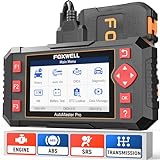
- [Easy to Use—Work Out of the Box] + [FOXWELL 2026 New Version] FOXWELL NT604 Elite scan tool is the 2026 new version from FOXWELL, designed for car owners who want to figure out the cause of issues before fixing car problems by scanning common systems like ABS, SRS, engine, and transmission. The NT604 Elite obd2 scanner diagnostic tool comes with the latest software—no need to waste time downloading software first. Plug the scanner into the OBDII port with OBDII cable to start the diagnosis.
- [Affordable] + [Reliable Car Health Monitor] Will you be confused what happens when the warning light of ABS/SRS/transmission/check engine flashes? Instead of taking your cars to dealership, this FOXWELL scanner will help you do a thorough scanning and detection for your cars and pinpoint the root cause. Note:The device is a diagnostic tool, not a repair tool. To turn off a warning light, you must first physically repair the issue causing it. Only then can the scanner be used to clear the corresponding fault code.
- [5 in 1 Car Diagnostic Scanner] Compared with obd scanners (50-100), NT604 Elite code scanner not only includes their OBDII diagnosis but also serves as ABS/SRS scanner, transmission and check engine code reader. When it’s an odb2 scanner, you can use it to check if your car is ready for annual test through I/M readiness menu. In addition, live data stream, built-in DTC library, data play back and print, all these features are a big plus for it. Note: doesn't support maintenance functions like reset or relearn. For the SRS system, NT604 Elite can read and clear common fault codes not caused by a crash, but crash/collision data cannot be cleared.
- [Fantastic AUTOVIN] + [No extra software fee] Through the AUTOVIN menu, this NT604 Elite car scanner allows you to get your V-IN and vehicle info rapidly, no need to take time to find your V-IN and input one by one. What's more, the NT604 Elite ABS SRS scanner supports 60+ car brands from worldwide (America/Asia/Europe). You don’t need to pay extra software fee. AUTOVIN may not work on some older vehicles or certain vehicle brands. If AUTOVIN fails, please input the vin code manually or go to the Diagnostic Menu to select your vehicle model.
- [Solid protective case KO plastic carrying bag] + [Lifetime update] Almost all same price-level car scanner diagnostic tool only offers plastic bag to hold the scanner.However, NT604 Elite automotive scanner is equipped with solid protective case, preventing your obd2 scanner from damage. Then you don’t need to pay extra money to buy a solid toolbox.

- CEL Doctor: The ANCEL AD310 is one of the best-selling OBD II scanners on the market and is recommended by Scotty Kilmer, a YouTuber and auto mechanic. It can easily determine the cause of the check engine light coming on. After repairing the vehicle's problems, it can quickly read and clear diagnostic trouble codes of emission system, read live data & hard memory data, view freeze frame, I/M monitor readiness and collect vehicle information
- Sturdy and Compact: Equipped with a 2.5 foot cable made of very thick, flexible insulation. It is important to have a sturdy scanner as it can easily fall to the ground when working in a car. The AD310 OBD2 scanner is a well-constructed mechanic tool with a sleek design. It weighs 12 ounces and measures 8.9 x 6.9 x 1.4 inches. Thanks to its compact design and light weight, transporting the device is not a problem. The buttons are clearly labelled and the screen is large and displays results clearly
- Accurate Fast and Easy to Use: The AD310 scanner can help you or your mechanic understand if your car is in good condition, provides exceptionally accurate and fast results, reads and clears engine trouble emission codes in seconds after you fixed the problem. This device will let you know immediately and fix the problem right away without any car knowledge. No need for batteries or a charger, get power directly from the OBDII Data Link Connector in your vehicle
- OBDII Protocols and Car Compatibility: Many cheap scan tools do not really support all OBD2 protocols. AD310 scanner as it can support all OBDII protocols such as KWP2000, J1850 VPW, ISO9141, J1850 PWM and CAN. This device also has extensive vehicle compatibility with 1996 US-based, 2000 EU-based and Asian cars, light trucks, SUVs, as well as newer OBD2 and CAN vehicles both domestic and foreign. Pls confirm with our customer service whether it is compatible with your vehicle before purchasing
- Home Necessity and Worthy to Own: This is an excellent code reader to travel or home with as it weighs less and it is compact in design. You can easily slide it in your backpack as you head to the garage, or put it on the dashboard, this will be a great fit for you. The AD310 is not only portable, but also accurate and fast in performance. Moreover, it covers various car brands and is suitable for people who just need a code reader to check their car
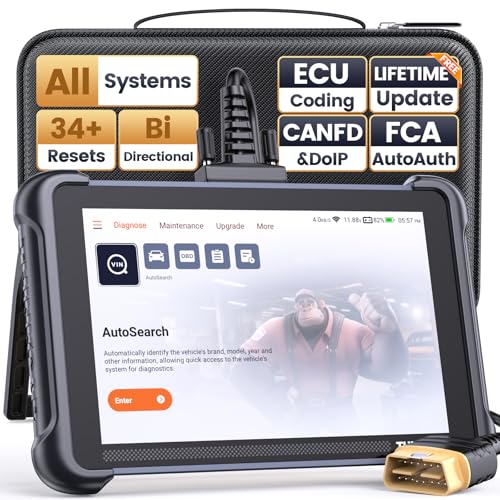
- 【Warm Tips】Dear friend, we've built this product to last, but in the unlikely event you encounter any technical hiccups, functions not support, received a used product, or just a simple question, please directly c0ntact us via Amazon Message and support @ mythinkcar. com, we're here to help and get it sorted in no time. Not sure if this product is compatible with your vehicle? Just e.mail your VIN at support @ mythinkcar. com for technical support. Note: FCA AutoAuth is a third-party service, additional cost may require.
- 【Professional Car Diagnostic Tool】Tired of renew fees? Thinkscan 689 scanner provides dealer-level advanced functions without annual fees for auto mechanics and repair shops. 34+ Services, 3000+ Active Test, ECU Coding, 140+ Brands Coverage, FCA AutoAuth, CANFD&DOIP Protocol, Component Matching, Power Balance, V.A.G Guided, Compatible with Google Chrome integration, etc. With strong hardware backing, 64G Memory, Android 10, 4-core processors, and 4150mAh battery. Thinkscan 689 brings you the best as your daily business helper and never lets you drop the ball!
- 【34+ Reset Service, Adaptation, Relearn, Calibration, Initialization, Matching】Made for workshops, Thinkscan 689 scanner provides 34+ services for worldwide vehicles: such as Gear/SAS/EPB/TPMS/D.P.F/BMS/ETS/Oil/Brake/AFS/GEARB0X/SUNROOF/SUS Reset, ABS Bleed, Injector coding, etc. Warm tips: Compatibility varies by car model, please reach out to us directly to make sure it works well on your cars.
- 【Real Active Test】Thinkscan 689 scan tool features over 3000+ full bi-directional control ability, to send commands to vehicle’s systems/components, to verify system input/output without using the vehicle's controls, e.g. turn on the radiator fan, modulate the throttle, open/close windows, operate mirrors, Injector Buz Test, turn on interior&exterior lights, sound horn, test door lock actuators, turn on/off front/rear side ACM Solenoid, Vehicle level position calibration, Wheel Speed Sensor Supply.
- 【Comprehensive Solutions with Advanced Features】Take your vehicle customization to the next level with the Thinkscan 689's advanced ECU coding capabilities. This scan tool provides power balance, PMI, unlock hidden features and enhance performance by activating dormant functions, customizing OE settings, matching replaced components, and reprogramming adaptive data to elevate your driving experience. Note: Compatibility varies by car models, please check before order.

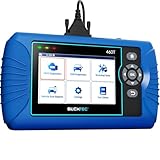
- [All System Diagnostics, Professional-Level Scanner] - BLCKTEC 460T is the ultimate OBD2 diagnostic tool for home mechanics and professionals. It supports all 10 OBD2 modes, reads and clears Engine/Transmission/ABS/SRS codes, performs All-System Diagnostics, offers workshop reset tools, and provides real-time live data. It helps you pinpoint issues, assess your car's condition, and prepare for SMOG checks with ease. NOTE: Function availability depends on your vehicle. Before you buy, be sure to use the Compatibility Checker on BLCKTEC website or contact our customer support to verify that the features you need are supported for your vehicle’s specific year, make, and model.
- [12+ Most Popular Reset Functions] - BLCKTEC 460T OBD2 scanner offers 12+ dealer-level service functions, including Oil Maintenance Reset, ABS Bleeding, EPB Reset, SAS(Steering Angle Sensor) Recalibration, DPF(Diesel Particulate Filter) Reset, Throttle Body Relearn, Battery Reset/Initialization, TPMS Relearn, Transmission Reset, Fluid Change Reset, Maintenance Reset and more, enabling you to perform workshop services like a pro. NOTE: Function availability depends on your vehicle. Be sure to use the Compatibility Checker on BLCKTEC website to verify that the features you need are supported for your vehicle.
- [Real-Time OBD2 and OEM Live Data, Freeze Frame Data] - BLCKTEC 460T helps diagnose vehicle issues when warning lights like Check Engine Light or ABS/SRS Light appear. It offers detailed DTC info, ECU Freeze Frame Data, and real-time OBD2 and advanced OEM live data, including Engine, Transmission, ABS, SRS, and more, making it easy to diagnose and resolve vehicle problems. You can view, graph, record, replay, and overlay up to four live data streams in a single graph for better analysis.
- [AutoVIN, AutoReLink, AutoScan, 3X Faster] - Equipped with AutoVIN technology, 460T automatically retrieves the VIN to save you time. Its AutoScan and AutoReLink features scan all of the vehicle's ECUs and detect any fault codes immediately after you plug the scanner into the vehicle's OBD2 port - no button presses required. Additionally, it regathers DTC and I/M readiness information every 30 seconds, simplifying monitor tests. 460T's advanced technology makes it 3X faster than other products.
- [Get RepairSolutions2, the #1 Auto Repair App for Free] - When paired with RepairSolutions2(RS2) App, 460T becomes even more powerful. RS2's Verified Fix Database built by master technicians, provides the parts needed for the repair. Additionally, RS2 gives you access to OEM warranty info, maintenance schedules, TSB, and dealership recall info, making car care easier than ever. RS2 is free with no subscription fees and it stores your car scan reports in the cloud, allowing you to access, share, or print them anytime and anywhere.

- 【Diagnose Check Engine Light in Seconds – No Mechanic Needed】The FOXWELL NT301 OBD2 scanner instantly reads & clears engine fault codes (DTCs) with one click. Simply plug into the 16-pin DLC port, turn ignition on, and get accurate results within seconds—No prior car knowledge required. Save hundreds on dealership fees by knowing exactly what’s wrong before you visit a shop. The #1 choice car scanner for DIYers and car owners who want to take control of their vehicle’s health
- 【Clear & Reset CEL with Confidence】Unlike cheap code readers that just erase codes temporarily, NT301 works like all professional vehicle code readers: It clears the check engine light only after you’ve fixed the underlying issue. If the problem isn’t fully repaired, the fault code will reappear. So you’ll never get a false pass. Use the foxwell scanner to verify your repair work and drive with peace of mind
- 【Sm-og Check Helper – Know Your Pass/Fail Status Before the Test】With dedicated one-click I/M readiness hotkeys and a simple Red-Yellow-Green LED indicator, you’ll instantly know if your vehicle is ready for annual testing. Built-in speaker provides clear audio feedback. No guesswork—just confidence before you head to the test center. One less thing to worry about when inspection day comes
- 【Advanced OBDII Modes – O- 2 Sensor & EVAP Testing】NT301 go beyond basic code reading with enhanced OBD2 modes. Run an EVAP system check to assess fuel tank condition, and use the O- 2 sensor test to optimize air-fuel ratio, boosting fuel economy, cutting em- issions, and saving you money at the pump. The code reader for cars and trucks is like having a mini em-issions lab in your glove box
- 【Live Data Graphing – Spot Engine Issues in Real Time】View and log live sensor data in easy-to-read graphs with this OBD2 scanner diagnostic tool. Monitor ox- ygen sensors, fuel trims, coolant temperature, RPM, and more to spot suspicious values instantly. This obd scanner gives you professional-grade insight without the pro price tag—a feature you won’t find on basic $20 car code readers
SEOCONTENT-START
OMB Control No.: 2127-0004 Part 573 Safety Recall Report 23V-651 The information contained in this report was submitted pursuant to 49 CFR §573 Manufacturer Name : Hyundai Motor America Submission Date : SEP 22, 2023 NHTSA Recall No. : 23V-651 Manufacturer Recall No. : 251 Manufacturer Information : Manufacturer Name : Hyundai Motor America Address : 10550 Talbert Avenue Fountain Valley CA 92708 Company phone : 800-633-5151 Population : Number of potentially involved : 1,642,551 Estimated percentage with defect : 1 % Vehicle Information : Vehicle 1 : 2012-2015 Hyundai Accent Vehicle Type : LIGHT VEHICLES Body Style : 4-DOOR Power Train : GAS Descriptive Information : The subject vehicles include 240,589 model year 2012-2015 Hyundai Accent vehicles produced on the specified dates by Hyundai Motor Company (“HMC”) for sale in the U.S. market. Production Dates : MAR 05, 2011 – OCT 31, 2014 VIN Range 1 : Begin : NR End : NR Not sequential Vehicle 2 : 2012-2015 Hyundai Azera Vehicle Type : LIGHT VEHICLES Body Style : 4-DOOR Power Train : GAS Descriptive Information : The subject vehicles include 29,232 model year 2012-2015 Hyundai Azera vehicles produced on the specified dates by Hyundai Motor Company (“HMC”) for sale in the U.S. market. Production Dates : NOV 29, 2011 – OCT 31, 2014 VIN Range 1 : Begin : NR End : NR Not sequential Part 573 Safety Recall Report 23V-651 Page 2 The information contained in this report was submitted pursuant to 49 CFR §573 Vehicle 3 : 2011-2015 Hyundai Elantra Vehicle Type : LIGHT VEHICLES Body Style : 4-DOOR Power Train : GAS Descriptive Information : The subject vehicles include 777,145 model year 2011-2015 Hyundai Elantra vehicles produced on the specified dates by Hyundai Motor Company (“HMC”) and Hyundai Motor Manufacturing Alabama (“HMMA”) for sale in the U.S. market. Production Dates : OCT 29, 2010 – NOV 13, 2014 VIN Range 1 : Begin : NR End : NR Not sequential Vehicle 4 : 2013-2015 Hyundai Elantra Coupe Vehicle Type : LIGHT VEHICLES Body Style : 2-DOOR Power Train : GAS Descriptive Information : The subject vehicles include 22,481 model year 2013-2015 Hyundai Elantra Coupe vehicles produced on the specified dates by Hyundai Motor Company (“HMC”) for sale in the U.S. market. Production Dates : MAR 16, 2012 – OCT 30, 2014 VIN Range 1 : Begin : NR End : NR Not sequential Vehicle 5 : 2014-2015 Hyundai Equus Vehicle Type : LIGHT VEHICLES Body Style : 4-DOOR Power Train : GAS Descriptive Information : The subject vehicles include 6,013 model year 2014-2015 Hyundai Equus vehicles produced on the specified dates by Hyundai Motor Company (“HMC”) for sale in the U.S. market. Production Dates : APR 12, 2013 – OCT 29, 2014 VIN Range 1 : Begin : NR End : NR Not sequential Vehicle 6 : 2011-2015 Hyundai Genesis Coupe Vehicle Type : LIGHT VEHICLES Body Style : 2-DOOR Power Train : GAS Descriptive Information : The subject vehicles include 51,789 model year 2011-2015 Hyundai Genesis Coupe vehicles produced on the specified dates by Hyundai Motor Company (“HMC”) for sale in the U.S. market. Production Dates : SEP 01, 2010 – OCT 31, 2014 VIN Range 1 : Begin : NR End : NR Not sequential Part 573 Safety Recall Report 23V-651 Page 3 The information contained in this report was submitted pursuant to 49 CFR §573 Vehicle 7 : 2013-2015 Hyundai Santa Fe Vehicle Type : LIGHT VEHICLES Body Style : SUV Power Train : GAS Descriptive Information : The subject vehicles include 45,322 model year 2013-2015 Hyundai Santa Fe vehicles produced on the specified dates by Hyundai Motor Company (“HMC”) for sale in the U.S. market. Production Dates : OCT 17, 2012 – OCT 31, 2014 VIN Range 1 : Begin : NR End : NR Not sequential Vehicle 8 : 2013-2013 Hyundai Santa Fe Sport Vehicle Type : LIGHT VEHICLES Body Style : SUV Power Train : GAS Descriptive Information : The subject vehicles include 75,554 model year 2013 Hyundai Santa Fe Sport vehicles produced on the specified dates by Kia Motors Manufacturing Georgia (“KMMG”) for sale in the U.S. market. Production Dates : JUL 12, 2012 – JUN 15, 2013 VIN Range 1 : Begin : NR End : NR Not sequential Vehicle 9 : 2010-2013 Hyundai Tucson Vehicle Type : LIGHT VEHICLES Body Style : SUV Power Train : GAS Descriptive Information : The subject vehicles include 170,402 model year 2010-2013 Hyundai Tucson vehicles produced on the specified dates by Hyundai Motor Company (“HMC”) for sale in the U.S. market. Production Dates : DEC 08, 2009 – AUG 19, 2013 VIN Range 1 : Begin : NR End : NR Not sequential Vehicle 10 : 2015-2015 Hyundai Tucson Fuel Cell Vehicle Type : LIGHT VEHICLES Body Style : SUV Power Train : CNG/LPG Descriptive Information : The subject vehicles include 60 model year 2015 Hyundai Tucson Fuel Cell vehicles produced on the specified dates by Hyundai Motor Company (“HMC”) for sale in the U.S. market. Production Dates : APR 28, 2014 – OCT 23, 2014 VIN Range 1 : Begin : NR End : NR Not sequential Part 573 Safety Recall Report 23V-651 Page 4 The information contained in this report was submitted pursuant to 49 CFR §573 Vehicle 11 : 2011-2015 Hyundai Sonata Hybrid Vehicle Type : LIGHT VEHICLES Body Style : 4-DOOR Power Train : HYBRID ELECTRIC Descriptive Information : The subject vehicles include 83,213 model year 2011-2015 Hyundai Sonata HEV (Hybrid)vehicles produced on the specified dates by Hyundai Motor Company (“HMC”) for sale in the U.S. market. Production Dates : DEC 02, 2010 – OCT 31, 2014 VIN Range 1 : Begin : NR End : NR Not sequential Vehicle 12 : 2012-2015 Hyundai Veloster Vehicle Type : LIGHT VEHICLES Body Style : HATCHBACK Power Train : GAS Descriptive Information : The subject vehicles include 116,911 model year 2012-2015 Hyundai Veloster vehicles produced on the specified dates by Hyundai Motor Company (“HMC”) for sale in the U.S. market. Production Dates : JUL 02, 2011 – OCT 31, 2014 VIN Range 1 : Begin : NR End : NR Not sequential Vehicle 13 : 2010-2012 Hyundai Veracruz Vehicle Type : LIGHT VEHICLES Body Style : SUV Power Train : GAS Descriptive Information : The subject vehicles include 23,840 model year 2010-2012 Hyundai Veracruz vehicles produced on the specified dates by Hyundai Motor Company (“HMC”) for sale in the U.S. market. Production Dates : DEC 24, 2009 – AUG 09, 2012 VIN Range 1 : Begin : NR End : NR Not sequential Description of Defect : Description of the Defect : The subject vehicles are equipped with Anti-Lock Brake System (“ABS”) modules that could leak brake fluid internally and cause an electrical short over time. FMVSS 1 : NR FMVSS 2 : NR Description of the Safety Risk : An electrical short could result in significant overcurrent in the ABS module increasing the risk of an engine compartment fire while parked or driving. Description of the Cause : Certain ABS motor shaft O-ring material formulations may be susceptible to physical changes over time due to varying factors, including vehicle ABS Part 573 Safety Recall Report 23V-651 Page 5 The information contained in this report was submitted pursuant to 49 CFR §573 specifications and/or the presence of foreign contaminants in the brake fluid, such as moisture, dirt, and dissolved metals, which could affect sealing strength and result in brake fluid leaking onto the ABS controller PCB. Identification of Any Warning that can Occur : 1. Smoke from the engine compartment. 2. Burning/melting odor. 3. Illumination of the MIL and/or ABS light. Involved Components : Component Name 1 : ABS Assembly Component Description : ABS module Component Part Number : 58900-***** Supplier Identification : Component Manufacturer Name : Mando Address : 32, Hamanho-gil, Poseung-eup Foreign States Country : Korea, Republic of Chronology : Please see Attachment A Part 573 Safety Recall Report 23V-651 Page 6 The information contained in this report was submitted pursuant to 49 CFR §573 Description of Remedy : Description of Remedy Program : Owners can continue driving these vehicles; however, Hyundai recommends parking their vehicles outside and away from structures until the recall remedy is completed. All owners of the subject vehicles will be notified by first class mail with instructions to bring their vehicles to a Hyundai dealer for replacement of the ABS fuse. This remedy will be offered at no cost to owners for all affected vehicles, regardless of whether the affected vehicles are still covered under Hyundai’s New Vehicle Limited Warranty. Additionally, Hyundai will provide owners of affected vehicles reimbursement for out-of-pocket expenses incurred to obtain a remedy for the recall condition in accordance with the reimbursement plan submitted to NHTSA on February 24, 2022. How Remedy Component Differs from Recalled Component : The remedy fuse is rated at a lower amperage to effectively limit the operating current of the ABS module. Identify How/When Recall Condition was Corrected in Production : The ABS motor shaft O-ring material formulation was changed by the supplier in September 2014 and February 2015 at the Korea and U.S. plants, respectively. Recall Schedule : Description of Recall Schedule : Dealers and owners will be notified by the specified dates. Planned Dealer Notification Date : NOV 21, 2023 – NOV 21, 2023 Planned Owner Notification Date : NOV 21, 2023 – NOV 21, 2023 * NR – Not Reported
**************************************************************************************************************
1 Safety Recall 251: ABS Module Overheat – Dealer Best Practice September 26th, 2023 Updates to this Document Date • Remedy Not Available 09/26/2023 Recall Description The subject vehicles are equipped with Anti-Lock Brake System (“ABS”) modules that could leak brake fluid internally and cause an electrical short over time. An electrical short could result in significant overcurrent in the ABS module increasing the risk of an engine compartment fire while parked or driving. An electrical short could result in significant overcurrent in the ABS module increasing the risk of an engine compartment fire while parked or driving. Applicable Vehicles (Certain) • 2012-15MY Accent (RB) produced from 03/05/2011 – 10/31/2014 • 2012-15MY Azera (HG) produced from 11/29/2011 – 10/31/2014 • 2011-15MY Elantra (MD/UD) produced from 10/29/2010 – 11/13/2014 • 2013-15MY Elantra Coupe (JK) produced from 03/16/2012 – 10/30/2014 • 2014-15MY Equus (VI) produced from 04/12/2013 – 10/29/2014 • 2011-15MY Genesis Coupe (BK) produced from 09/01/2010 – 10/31/2014 • 2013-15MY Santa Fe (NC) produced from 10/17/2012 – 10/31/2014 • 2013MY Santa Fe Sport (AN) produced from 07/12/2012 – 06/15/2013 • 2011-15MY Sonata Hybrid (YF HEV) produced from 12/02/2010 – 10/31/2014 • 2010-13MY Tucson (LM) produced from 12/08/2009 – 08/19/2013 • 2015MY Tucson Fuel Cell (LMFC) produced from 04/28/2014 – 10/23/2014 • 2012-15MY Veloster (FS) produced from 07/02/2011 – 10/31/2014 • 2010-12MY Veracruz (EN) produced from 12/24/2009 – 08/09/2012 Remedy Information This remedy is currently under development and additional information will be provided once it has been developed for release by HMA. Recommended Alternative Transportation A Service Rental Vehicle (SRC) should be provided to customers who do not feel safe operating their vehicle until a remedy is available. In addition, a SRC may be required based on any other additional work on the vehicle that may need to be addressed during customer’s visit. If a SRC is not available, other options such as a 3rd Party Rental or Rideshare may be provided. Warranty Information Warranty information will be updated once remedy has been released by HMA. Parts Information Parts, if applicable, will be provided once a remedy has been released by HMA. IMPORTANT NOTICE: Owners can continue driving these vehicles, however, Hyundai recommends owners to park their vehicles outside and away from structures until the recall remedy is completed. Additional Training & Resources Remedy is currently under development. Applicable training courses related to this recall, if applicable, will be provided once a remedy has been released by HMA. Sample Customer Talk Tracks 1. “If you experience any concern(s) related to the performance of your vehicle, such as illumination of the malfunction indicator lamp and/or ABS (Anti-Lock Brake System) light, please have your vehicle towed to the nearest Hyundai dealer and do not attempt to drive the vehicle until a remedy has been applied.” 2. “During your visit today, I checked your vehicle for any open campaigns or recalls and found that your vehicle has an open recall without an available remedy. The recall states that it is a condition relating to the anti-lock brake system (ABS) that could leak brake fluid. This condition could create an electrical short, increasing the risk of an engine compartment fire. Once a remedy is available, Hyundai will notify you via First Class mail advising you to bring your vehicle to a Hyundai dealer to have it applied at no cost to you.” Best Practice Checklist Reservation: Did you check WebDCS for additional campaigns or recalls? □ Yes □ No – Please ensure all open campaign(s)/recall(s) are identified and completed by the dealership if remedy/repair(s) are available. Reception: Did you offer the customer Alternative Transportation? □ Yes □ No – Customer should be offered if they feel unsafe in the operation of their vehicle prior to the release of the official remedy. Customer FAQ Q1: What is the issue? A1: The subject vehicles are equipped with Anti-Lock Brake System (“ABS”) modules that could leak brake fluid internally and cause an electrical short over time. An electrical short could result in significant overcurrent in the ABS module increasing the risk of an engine compartment fire while parked or driving. Q2: What are the affected vehicles? A2: Affected vehicles include the following models/model years: • Certain 2012-15MY Accent (RB) produced from 03/05/2011 – 10/31/2014 • 2012-15MY Azera (HG) produced from 11/29/2011 – 10/31/2014 • 2011-15MY Elantra (MD/UD) produced from 10/29/2010 – 11/13/2014 • 2013-15MY Elantra Coupe (JK) produced from 03/16/2012 – 10/30/2014 • 2014-15MY Equus (VI) produced from 04/12/2013 – 10/29/2014 • 2011-15MY Genesis Coupe (BK) produced from 09/01/2010 – 10/31/2014 • 2013-15MY Santa Fe (NC) produced from 10/17/2012 – 10/31/2014 • 2013MY Santa Fe Sport (AN) produced from 07/12/2012 – 06/15/2013 • 2011-15MY Sonata Hybrid (YF HEV) produced from 12/02/2010 – 10/31/2014 • 2010-13MY Tucson (LM) produced from 12/08/2009 – 08/19/2013 • 2015MY Tucson Fuel Cell (LMFC) produced from 04/28/2014 – 10/23/2014 • 2012-15MY Veloster (FS) produced from 07/02/2011 – 10/31/2014 • 2010-12MY Veracruz (EN) produced from 12/24/2009 – 08/09/2012 Q3: What is the safety concern? 2 A3: An electrical short could result in significant overcurrent in the ABS module increasing the risk of an engine compartment fire while parked or driving. Q4: Have there been any accidents or injuries? A4: As of the filing to NHTSA on 09/22/2023, there are no crashes, injuries, or fatalities attributable to this condition. As of 09/22/23, twenty-one (21) related vehicle fires and twenty-two (22) thermal incidents (i.e. smoking, burning, melting, etc) have occurred in the U.S. and two (2) thermal incidents have occurred in Canada. Q5: Will a Dealer Stop Sale be issued? A5: No, as the involved vehicles are no longer in production or offered for retail sale. Q6: What will be done during the recall service at the dealer? A6: Once an official remedy is available from HMA, all owners of the subject vehicles will be notified by First Class mail with instructions to bring their vehicles to a Hyundai dealer to have the remedy completed at no cost, regardless of whether the affected vehicles are still covered under Hyundai’s New Vehicle Limited Warranty. Additionally, Hyundai will provide owners of affected vehicles reimbursement for out-of-pocket expenses incurred to obtain a remedy for the recall condition in accordance with the reimbursement plan submitted to NHTSA on February 24, 2022. Owners can continue driving these vehicles, however, Hyundai recommends owners to park their vehicles outside and away from structures until the recall remedy is completed. Q7: When will owners be notified? A7: Owners of the subject vehicles will be notified via First Class mail in late November 2023. Contact Reference Please see the list on the following page for commonly referred to contacts. Thank you for your prompt attention to this important safety matter and continued commitment to Hyundai customers. 3 Key Contact Information Dealer Support Contact Information Description Parts Techline Warranty HELPREP Line Warranty Prior Approval (PA)Center Xtime Technical Support [email protected] 1-800-545-4515 1‐800‐325‐6604 1‐877‐446‐2922 [email protected] [email protected] 1‐866‐984‐6355 Parts ordering hotline Vehicle Technical Support for Hyundai Dealer Technicians Warranty Claim questions for Hyundai Dealers Warranty Prior Approval (PA) Center for Hyundai Dealers Assistance with Car Care Scheduling: • Appointment / ShopCapacity Management / Campaign Integration / OperationCodes AutoLoop Technical Support [email protected] 1-877-850-2010 Assistance with Car Care Scheduling: • Appointment / ShopCapacity Management / Campaign Integration / OperationCodes CDK Technical Support Customer Support HyundaiCustomer Care Center (Recall/Campaign Questions) HyundaiRecall /Campaign Website Hyundai Customer Care Center(GeneralQuestions) HyundaiRoadside Assistance https://serviceconnect.support.cdk.com/ Contact Information 1‐855‐671‐3059 www.hyundaiusa.com/recall 1‐800‐633‐5151 1-800-243-7766 Assistance with Car Care Scheduling: • Appointment / ShopCapacity Management / Campaign Integration / OperationCodes Description Customer questions or concerns related to recall or service campaigns Updated information related to the specific recall or service campaign Customers general questions, non‐campaign related HyundaiRoadside Assistance Key Reference Information Name Source Campaign Central Consolidated repository of recall and service campaign dealer best practices. Located on the service tab homepage in www.HyundaiDealer.com Car Care Scheduling (Xtime) -Tutorials www.HyundaiDealer.com > Service > Dealer Resources > DocumentsLibrary > Car Care Scheduling Car Care Scheduling(Xtime) -Recall Appointment Notification 1. Log into Xtime 2. Under the menu at the top left, select ‘CONFIGURE’ 3. Under the dealership tab, click “EMAIL COMMUNICATION” 4. Slide the toggle to “ADVANCED” 5. Populate as many e-mails as desired in the “PARTS DESK EMAILFIELD” Parts – Campaign Parts Management (CPM) Procedure Service Rental Car (SRC)Program Technical Service Bulletin (TSB) Uncompleted Campaign VIN Listing Recall Campaign Website NHTSAWebsite As applicable; www.HyundaiDealer.com > Parts > Documents Library > Campaign Parts Management SRC Documentation: www.HyundaiDealer.com > Service tab > Documents Library > Service Rental Car TSD: www.HyundaiDealer.com > Service tab > SRC Fleet Mgmt Software Insurance: www.HyundaiDealer.com > Service tab > SRC Insurance www.HyundaiDealer.com > Service tab > Hyundai Tech Info A listing of vehicles is located on WEBDCS > SERVICE tab > select UNCOMPLETED CAMPAIGN VIN LISTING – Dealer Stock (New, SRC, CPO, etc.) and Retailed. www.hyundaiusa.com/recall www.safercar.gov 4 5 Appendix History Date • Remedy Not Available 09/26/2023
**************************************************************************************************************
**************************************************************************************************************
**************************************************************************************************************
SEOCONTENT-END
This product presentation was made with AAWP plugin.